Trump Told NATO to Send Warships to Hormuz. No Country Has Said Yes.
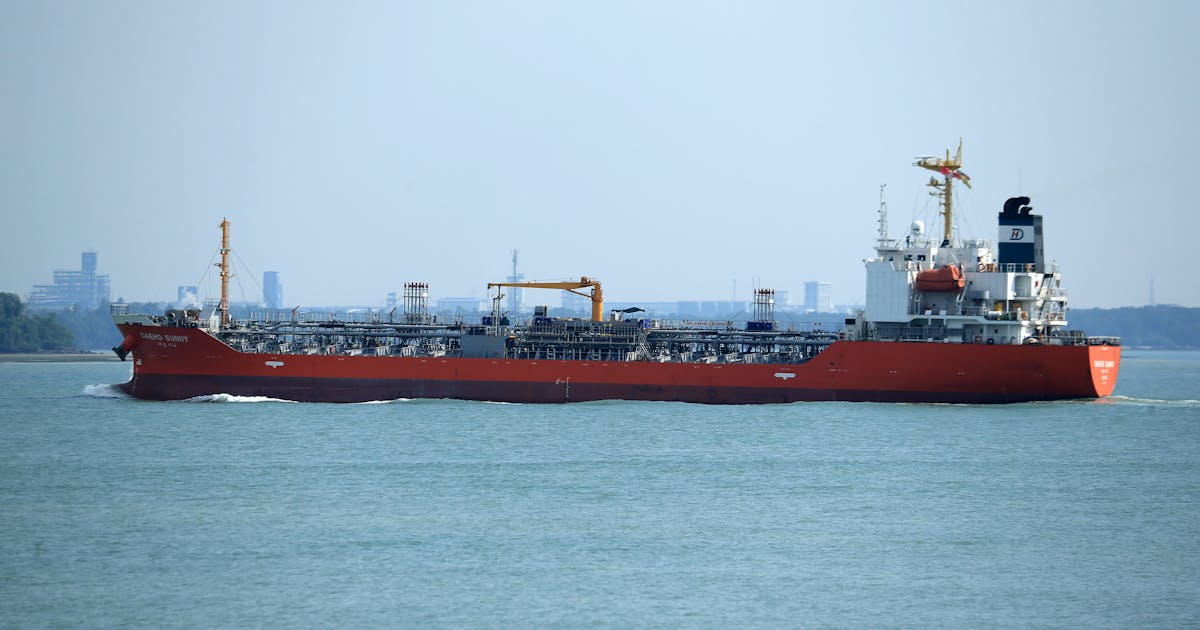
Trump told his allies to send warships to the Strait of Hormuz today. Every major ally said no. Oil crossed $99. And Trump warned NATO that it faces a “very bad future” if it refuses to help. Here is what happened, who said what, and what it means for energy markets.
What Trump Said
Speaking aboard Air Force One on Sunday and at a press conference Monday, President Trump demanded that countries reliant on Gulf oil contribute warships to secure the Strait of Hormuz. He said he has asked approximately 7 nations to participate, though he declined to name them. His message to those who refuse was direct: “Whether we get support or not, I can say this, and I said it to them: we will remember.”
Trump’s core argument is that the Strait matters far more to U.S. allies than to the U.S. itself. He claimed that roughly 90% of China’s crude imports pass through the waterway, while the U.S. relies on it for only 1% to 2% of its oil supply. Analysts note that China has spent years diversifying its energy imports to reduce exactly that kind of dependence, but the broader point stands: Europe and Asia are significantly more exposed to a Hormuz closure than the United States is.
What the Allies Said
No country has publicly committed to sending warships. Japan’s prime minister said Monday there are no plans to dispatch naval vessels. Australia’s transport minister told ABC Radio the country will not be sending ships. New Zealand’s finance minister said the country has not even received a formal request.
The UK’s position is the most nuanced. Prime Minister Keir Starmer acknowledged that the Strait must be reopened to “ensure stability in the market” but said Britain will not be “drawn into the wider war.” Trump said Starmer had offered to send aircraft carriers but criticized him for not deploying them before the conflict began.
The European Union is discussing whether to expand Operation Aspides, a naval mission currently protecting ships from Houthi attacks in the Red Sea. EU foreign policy chief Kaja Kallas said all member states would need to agree before Aspides could be extended to the Strait of Hormuz, an outcome that is far from certain.
Why No One Wants to Go
The U.S. Navy itself has refused near-daily requests from the shipping industry to escort vessels through the Strait, citing unacceptable attack risk. If the U.S. Navy considers the risk too high, the calculus for allied navies is even harder to justify politically. Edward Fishman of the Council on Foreign Relations noted that the allies being pressured are the same ones the Trump administration has hit with steep tariffs over the past year, which “raises questions about whether they would expect concessions from Washington in return for assistance.”
What It Means for Oil
WTI crude traded at $99.32 Monday. Brent hit $104.84. The Strait carries roughly one-fifth of the world’s oil and liquefied natural gas supply every day. The longer it stays closed without a credible reopening plan, the higher oil goes. Each $1 increase in crude translates to roughly 2.4 cents per gallon at the pump.
The 172 million barrel SPR release announced March 11 is designed to buy time. But as long as allied navies stay on the sidelines, the Strait remains closed, and the IEA’s 400 million barrel coordinated release covers only about 20 days of the disrupted supply. Markets are watching for any government to formally commit to a naval escort mission. None has.
Defense Stocks Are Paying Attention
Not everyone loses when geopolitical risk rises. BWX Technologies gained 5.3% today. Boeing was up 2%. RTX added 0.8%. European defense spending has been accelerating since Russia’s invasion of Ukraine in 2022, and NATO members are now under pressure to commit more. NATO spending is forecast to reach 2.8% of GDP by 2030, up from the longstanding 2% target. For U.S. defense contractors with deep backlogs in missile defense, radar, and air defense platforms, this is a multi-year revenue pipeline regardless of how the Strait situation resolves.
What To Watch
Watch for any allied government to formally announce a naval contribution in the next 48 hours. That would be the first sign that Trump’s pressure campaign is working. If Brent holds above $100 by Wednesday morning ahead of the FOMC decision, it materially narrows Powell’s ability to signal anything other than a long hold on rates.