
What Is OpenClaw, the AI Agent That Has China Obsessed and Governments Spooked?
An Austrian programmer built a tool in November 2025 to help organize his digital life. Four months later, hundreds of people are queuing outside Baidu’s headquarters in Beijing to set theirs up, China has banned it from government computers, Nvidia launched a product to make it enterprise-safe, and its creator has been hired by OpenAI. This is OpenClaw.
The Short Answer
OpenClaw is an AI agent, which is a meaningfully different thing from an AI chatbot. ChatGPT answers questions. OpenClaw takes actions. You connect it to an AI model of your choice, give it instructions through a messaging app, and it executes tasks autonomously: sending emails, booking flights, organizing files, managing your calendar, posting to social media. The distinction matters because an agent that can act on your behalf has access to your accounts, your data, and your identity in a way that a chatbot never does.
Who Built It and What Happened Next
OpenClaw was created by Peter Steinberger, an Austrian programmer, in November 2025. The project accumulated 100,000 GitHub stars within days of launch, a pace that signals genuine developer interest rather than hype. In February 2026, OpenAI hired Steinberger. A separate team that built Moltbook, a Reddit-style social network where OpenClaw agents talk to each other, was acquired by Meta. The original project has since transitioned to an independent foundation, which means no single company controls it.
Why China Cannot Get Enough of It
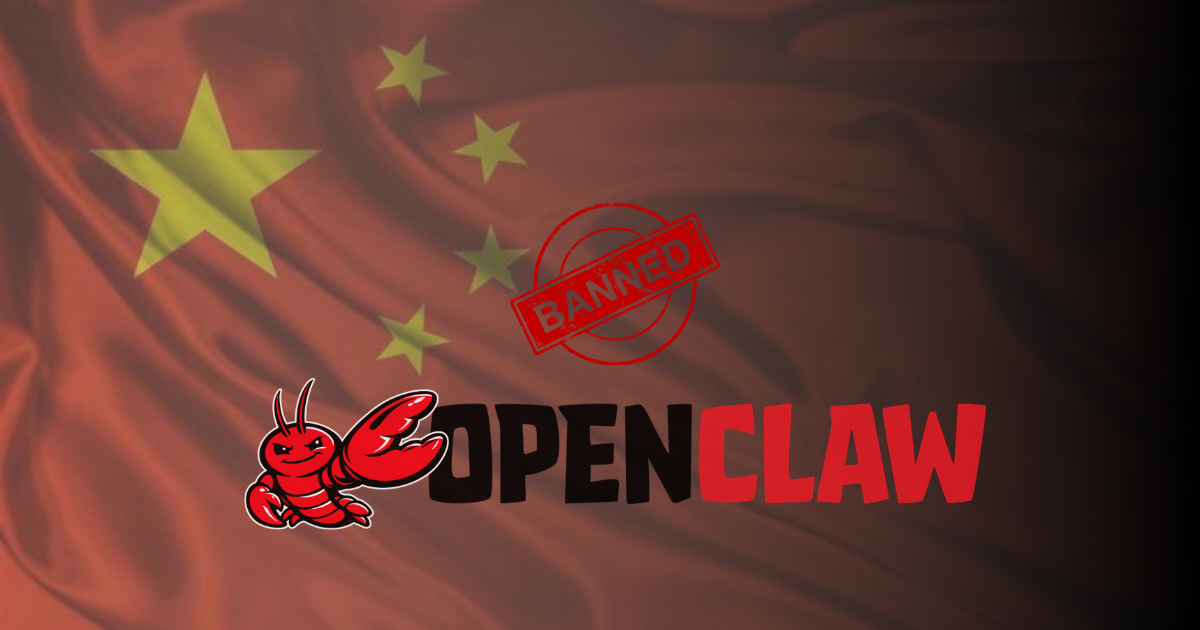
OpenClaw went viral in China faster than anywhere else. The tool has a red lobster as its mascot, which gave rise to the phrase “lobster fever.” Municipalities in Wuxi and Hangzhou pledged hundreds of thousands of dollars in subsidies for businesses building on OpenClaw. Hundreds of people queued at Baidu’s Beijing headquarters for free setup sessions. Tech giants Tencent, Alibaba, ByteDance, and Baidu all moved quickly to offer cloud hosting and simplified installation. The appeal is partly price: cloud deployment in China, subsidized by major tech firms, costs roughly the price of a cup of coffee per month.
Fear of missing out is also a real driver. Chinese consumers and entrepreneurs are acutely aware that the last AI wave, the large language model boom of 2023 and 2024, created winners and losers fast. Nobody wants to be late to the agent wave.
Why China Also Banned It
China’s national cybersecurity authorities and the Ministry of Industry and Information Technology have both issued warnings. State-owned enterprises and government agencies are now restricted from running OpenClaw on office computers. The core concern is structural: when an agent has your login credentials and authorization to act across your accounts, a compromised agent is not a data breach, it is a master key. “The attacker effectively gains a master key to your digital identity,” said one Chinese engineer who has been working with the tool.
The security risk is real. But so is the competitive motive. Tencent has WorkBuddy. ByteDance has ArkClaw. Zhipu AI has AutoClaw. China’s government has every reason to push users toward domestic alternatives rather than a Western tool built on Western AI models and now owned by OpenAI.
Where Nvidia Fits In
At GTC 2026 this week in San Jose, Nvidia unveiled NemoClaw, an open-source security stack designed to make the OpenClaw ecosystem enterprise-ready. The move is significant. Nvidia is not just a chip company anymore. By building the security and governance layer for the fastest-growing AI agent platform, it positions itself as critical infrastructure for the agentic AI era, not just a hardware supplier to the companies building it.
What To Watch
Two earnings reports this week will give the first real read on how the OpenClaw wave is affecting actual revenue. Tencent reports Wednesday. Analysts at Goldman Sachs estimate 13% revenue growth and expect the company’s WorkBuddy integration to be a key talking point. Alibaba reports Thursday. Both stocks have already moved on OpenClaw speculation. The question is whether the fundamentals match the narrative. If they do, the agentic AI trade has legs. If they do not, the lobster fever breaks fast.