The Fed Is Trapped. Inflation Is Rising, Growth Is Slowing, and There Is No Good Move.
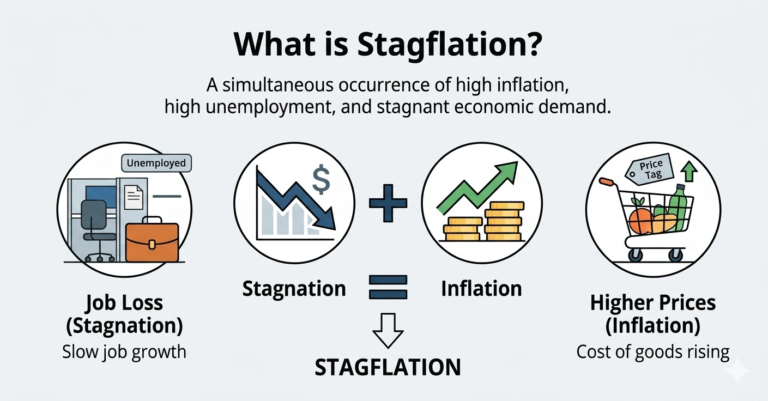
The Federal Reserve meets on March 18. It cannot cut rates because oil is at $120 and inflation is rising. It cannot hike rates because 92,000 jobs were lost in February and recession odds sit at 42%. There is no good move. That is not a policy challenge. That is a trap.
Why Most People Are Getting This Wrong
The consensus view on Wall Street is that the Fed will hold rates at 3.5% to 3.75% this week and wait for more data. That framing makes it sound like patience is a strategy. It is not. Holding rates while inflation accelerates and growth deteriorates is not neutral. It is choosing to let the problem compound. Every week the Fed holds, oil stays at $120 and energy costs work their way through supply chains into the price of everything else. The Fed is not buying time. It is losing it.
The Evidence
The data this month has been unambiguous. WTI crude oil briefly hit $120 per barrel last week, the highest since 2022. The Bureau of Labor Statistics reported that employers shed 92,000 positions in February as unemployment climbed to 4.4%. GDP growth estimates for Q1 2026 have fallen to 1.4%. The University of Michigan’s consumer sentiment index dropped 2% in March, with respondents citing the Iran conflict directly. Deutsche Bank’s Jim Reid described the situation plainly: “Each passing day it gets harder to argue that the disruption to shipping and energy infrastructure will only prove temporary.”
The IEA has called this the largest supply disruption in the history of the global oil market. Cornell historian Nicholas Mulder put a number on it: the current conflict has locked up roughly 20 million barrels per day of Gulf oil production, compared to 4.5 million barrels per day during the 1973 OPEC embargo. The scale is not comparable. It is several times larger.
The Counterargument Does Not Hold
Bank of America’s economist Aditya Bhave argues that the Fed should lean dovish here, because the labor market is soft enough that a supply shock will not feed into sustained demand-driven inflation the way it did in 2022. That argument has surface logic. But it misreads the 1970s lesson. Fed Chair Arthur Burns made exactly this mistake in 1973, arguing that oil-driven inflation was a structural problem outside monetary policy’s reach. The result was a “stop and go” approach that allowed inflation to become entrenched for a decade. The lesson from 1973 is not that oil shocks require dovish policy. It is that failing to anchor inflation expectations early makes everything worse for longer.
What Follows From This
The Fed will hold on March 18 because holding is the only option that does not immediately make things worse. But holding is not a solution. If oil stays above $100 for two months, Oxford Economics projects a meaningful drag on global GDP growth with mild contractions in Europe and Japan. The US edges toward what they call a “temporary standstill.” At $120, that timeline accelerates.
Watch the March 18 press conference, not the rate decision itself. If Jerome Powell signals that inflation expectations are becoming unanchored, that changes the calculus for every risk asset. If he sounds patient, markets may rally briefly before the next oil print reminds them nothing has been resolved. The trap is set. The only question is how long it takes to close.