Powell Warned on Inflation. The Dow Dropped 700 Points. Gold Had Its Worst Day in Months.
Jerome Powell held rates, warned that higher energy prices will push inflation above the Fed’s target, and effectively took rate cuts off the table until December at the earliest. The Dow dropped 700 points. Gold fell 3.4% — its sixth consecutive losing session. And the market that is supposed to win during an inflation shock is getting hit the hardest. Here is what happened and why it matters.
What Powell Actually Said
The rate hold was fully priced in. Nobody moved on that. What moved markets was Powell’s press conference, where he said the Fed expects inflation to be “somewhat elevated” this year compared to previous projections, citing the oil shock from the Hormuz disruption. He made clear that the oil price surge was not a reason to cut rates and that the Fed would wait for “greater confidence” that inflation is sustainably declining before easing.
The dot plot confirmed the shift. The June cut is gone. The single remaining cut for 2026 is now penciled in for December. The longer-run neutral rate estimate was revised up. That is a hawkish outcome relative to where the market was positioned heading into the meeting.
The Numbers From Wednesday
- Dow Jones: -700+ points after Powell’s press conference
- Russell 2000: -1.5% (small caps hit hardest — most sensitive to rate path)
- SPY: -0.24% today, continuing lower
- QQQ: -0.32% today
- GLD: -4.09% today — one-month+ low, 6th losing session in a row
- WTI Crude: -2.11% at $94.28 (pulling back on Hormuz de-escalation signals)
- TLT (20yr bonds): +0.61% — bonds rallying as growth fears outweigh inflation fears
- Bitcoin: $70,269, testing $70,000 support
- PPI February: came in above expectations — producer prices accelerating before oil fully feeds through
Why Gold Is Falling During an Inflation Warning
This is the counterintuitive story of the week. Gold is supposed to be the inflation hedge. Powell just said inflation is going up. Oil is at $94. There is a war disrupting global supply chains. And gold just had one of its worst days in months.
The reason is the dollar. When the Fed signals higher-for-longer rates, the dollar strengthens. Gold is priced in dollars — a stronger dollar makes gold more expensive in every other currency, which reduces demand globally. The gold trade depends on a Fed pivot. Powell just pushed that pivot to December at the earliest. Gold priced that in immediately.
The second reason is that oil is actually pulling back. Hormuz is showing early signs of de-escalation. If the primary source of the inflation shock eases, the urgency of holding inflation hedges eases with it. Gold had been pricing in a prolonged Hormuz closure. It is now partially pricing that out.
What the Bond Market Is Saying
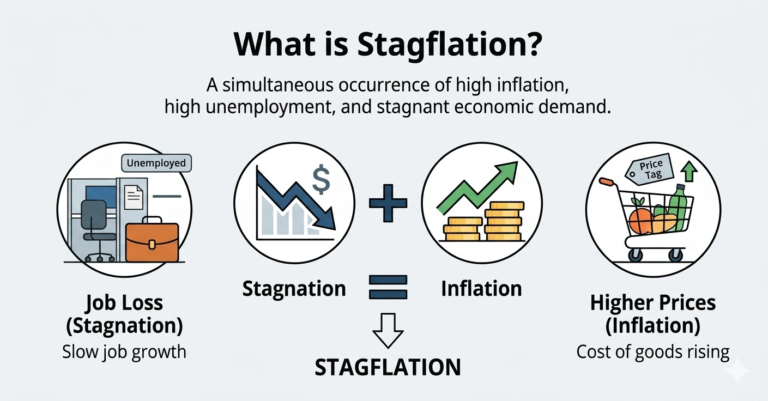
TLT — the long-duration Treasury ETF — is up while equities and gold are down. That is a flight-to-safety signal, but not a pure inflation panic. If the market were simply pricing in runaway inflation, bonds would be selling off alongside gold. Instead, bonds are catching a bid. That tells you the market is pricing in slowing growth as much as rising prices — the stagflation trade, where the Fed cannot cut because of inflation and cannot hike because the economy is weakening.
What To Watch From Here
4 things that will determine whether this selloff extends or stabilizes:
- Hormuz: Any confirmed reopening of the Strait removes the primary inflation input. Oil falls, gold falls further, and rate cut expectations can creep back.
- Bitcoin at $70,000: BTC is now testing its structural floor. A daily close below $70,000 on volume accelerates risk-off across the board.
- Alibaba earnings today: The second major China tech earnings after Tencent. OpenClaw-related revenue visibility will move Chinese ADRs and risk sentiment broadly.
- Oil next week: BMO’s estimate gives the U.S. and Israel roughly 3 weeks from now before SPR coverage runs thin and oil price pressure intensifies again. That clock is ticking.
The Fed signaled it will not rescue markets from the oil shock. That means the resolution has to come from the geopolitical side — not the monetary side. Until Hormuz reopens or a ceasefire is in place, the macro ceiling on risk assets stays low.