A Ceasefire Won’t Fix the Oil Crisis. Larry Fink Just Explained Why.
Markets rallied this week on reports of a 15-point US peace plan for Iran. Oil fell. Stocks climbed. The narrative shifted toward resolution. But Larry Fink, the CEO of BlackRock, the world’s largest asset manager with $14 trillion under management, put forward the most important economic warning of the year on Wednesday, and it was not about the war itself. It was about what comes after.
Everyone Is Trading the Wrong Scenario
The market is pricing two outcomes: ceasefire or escalation. If a ceasefire happens, oil falls and stocks rally. If the war escalates, oil spikes and stocks sell off. Traders are doing exactly this on a daily basis, moving billions of dollars on whether Trump’s latest Truth Social post sounds bullish or bearish.
Fink’s warning cuts through that binary. Speaking on BBC’s Big Boss Interview podcast, he said: “If there is a cessation of war, and yet Iran remains a threat, a threat to trade, a threat to the Strait of Hormuz, a threat to this peaceful coexistence of the GCC region, then I would argue that we could have years of above $100 closer to $150 oil which has profound implications in the economy. We will have global recession.” That is a third scenario the market is barely pricing: peace on paper, no peace on the water.
Why the Math on $150 Oil Is Not Outlandish
The Strait of Hormuz carries roughly 20% of global oil and LNG supply. The IEA has called the current disruption the biggest in its history. Before the war began on February 28, Brent crude was at $73. It spiked above $119 at its peak and is currently sitting around $94, which means it has already delivered a $21-per-barrel shock to the global economy. Research from Edmond de Rothschild Asset Management estimates that every $15 rise in oil adds 1 percentage point to inflation in developed economies while removing 0.3 to 0.4 percentage points from GDP growth. The math on what $150 oil would do is not theoretical.
Shell’s CEO Wael Sawan was more specific. Speaking at a major energy conference this week, he warned that Europe could face fuel shortages and rationing as early as next month. “South Asia was first to get that brunt. That’s moved to southeast Asia, northeast Asia and then more so into Europe as we get into April,” he said. The IEA head Fatih Birol said in Tokyo that the agency was prepared to release emergency oil reserves and described the situation as “a serious energy security threat.”
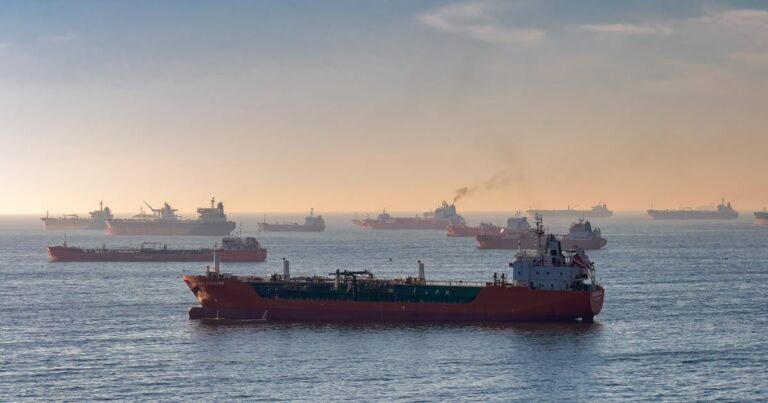
The 15-point US peace plan, which would require Iran to dismantle its three main nuclear sites and reopen the Strait of Hormuz, addresses the right problems. But the WSJ noted the plan does not specify how the Strait reopening would actually be enforced. In the five trading days since the war began, an average of fewer than 10 ships per day have passed through a waterway that normally handles hundreds. That is not a number that changes overnight because a document was signed.
“Rising energy prices is a very regressive tax. It affects the poor more than the wealthy. Years of oil above $100, closer to $150, has profound implications in the economy.”
Larry Fink, CEO, BlackRock — BBC Big Boss Interview, March 25, 2026
The Case for Optimism (and Why It Falls Short)
The counterargument is real. Iran’s economy cannot survive years of this conflict. China, which receives roughly 40% of its crude through the Strait of Hormuz, has both the leverage and the incentive to press Tehran toward a genuine settlement, not just a paper ceasefire. Pakistan’s active mediation role gives diplomacy a credible channel. And Fink himself acknowledged the reverse scenario: oil could fall below its pre-war level of $73 if Iran is fully brought back into the international system.
But that optimistic outcome requires Iran to accept terms it has publicly rejected twice in the past week. The new supreme leader, Mojtaba Khamenei, came to power through a conflict his predecessor did not survive. His domestic incentives run toward hardness, not concession. Every time an Iranian source calls Trump’s statements a “ruse” and rejects the peace plan, the credible path to sub-$80 oil gets longer. The market keeps choosing to believe the positive. That choice has a cost if it is wrong.
What to Actually Watch
Fink’s warning reframes the question investors should be asking. The question is not “will there be a ceasefire?” It is “will any ceasefire include binding, enforceable guarantees on Strait of Hormuz passage?” Without that, a ceasefire is a headline, not a supply chain fix. The ships are still stuck. The tankers are still parked. The rationing threat in Europe is still real. Watch the 15-point plan’s Hormuz clause carefully. Watch whether any in-person meeting produces a signed agreement with a specific reopening timeline and a third-party guarantor. If it doesn’t, the market will have rallied on a word, not on a solution.